
 English
 Español
 عربى

AM-S06 AM-S75 Self-Propelled Single-Mast Lift Platform
This self-propelled single mast aluminum alloy lift platform is built with high-strength aluminum alloy, offering a ligh...

Content
A distribution centre with racking topping out at 9.2 metres, a ground-level pick face and cross aisles only 1.4 metres wide wanted to stop staff climbing ladders to the top two beam levels, where roughly 40 minutes of productive time per shift was disappearing.
The answer was not one machine but a category decision. A warehouse lift platform is the right tool when the job is to raise a person, and often a small load, to a fixed working level and hold them there safely. Choosing between the available types comes down to four numbers and two site conditions: maximum working height, rated platform load, wheel and steering type, floor point-load tolerance, plus aisle width and floor finish. Get one wrong and the machine cannot reach the top beam, cannot turn into the aisle, or cannot legally be used on the slab it was bought for.
The term covers mobile elevating work platforms built for indoor use, not pallet trucks and not construction boom lifts. In practice you are looking at a wheeled base, an electric drive or manual push, a scissor, mast or picking carriage, and a guarded platform that lifts one or two people plus tools or stock.
Two distinctions matter at the buying stage. Platform height is not working height: a machine with a 6 metre platform height gives roughly 8 metres of working height once a 1.8 metre operator and arm reach are added. A platform rated for goods is also not automatically rated for people, so any unit carrying an operator must have guardrails, gates and interlocks to the relevant standard.
Most indoor lift platforms fall into five families. The table below sets out where each one fits and what usually goes wrong when it is specified for the wrong job.
| Type | Typical Working Height | Best Fit | Common Specification Risk |
|---|---|---|---|
| Electric scissor lift platform | 4–14 m | Rack maintenance, lighting and sprinkler work, stock take at height | Deck size and wheel load assumed, then found too heavy for a mezzanine slab |
| Warehouse high-altitude reclaimer | 3–8 m | Case and pallet picking from high racking, cycle counting | Travel and lift functions confused, so the unit cannot self-propel down the aisle |
| Mobile stock picker | 3–4 m | Zoned low and mid-level order picking | Payload treated as a pallet rating rather than a person plus tote rating |
| Vertical mast lift | 4–12 m | Single-person tasks in tight aisles and short-duration work | Small deck limits material carried, which slows the job |
| Custom lifting platform | Project specific | Mezzanine links, dock transfers, non-standard loads or dimensions | Design frozen too late, so lead time and cost both move |
If the task is repetitive picking rather than occasional maintenance, a reclaimer or picker usually gives the better return. If the task is repair work at height, a scissor platform with a larger deck and a wider load limit is the safer purchase.
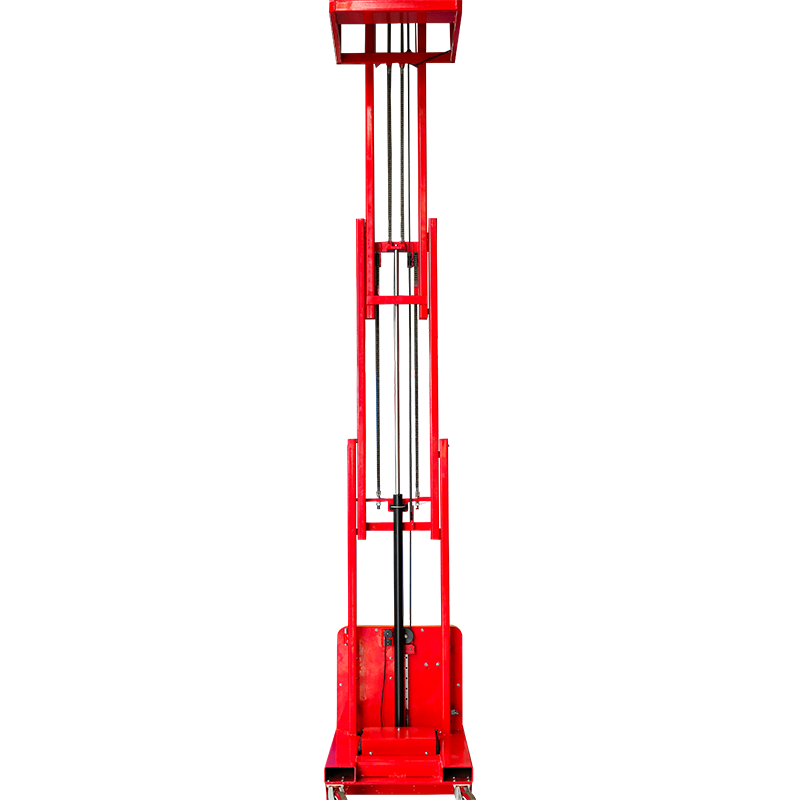 CKOP30–CKOP45 Self-Propelled Full Electric High-Altitude ReclaimerBattery-powered self-propelled reclaimer for aerial material picking in warehouses and logistics, with electric drive, zero turning radius and safety functions.View Product →
Start with the highest point an operator must reach, not with the platform height printed in a catalogue. If the top beam sits at 9.2 metres and the operator handles a box at shoulder level, the working height required is around 9.5 to 10 metres, which points to a platform height of about 8 metres.
Load is the second number. A scissor platform rated at 1,000 kilograms is a materials platform; a picking carriage rated at 200 to 300 kilograms is an operator platform with room for tools and a tote. Mixing those expectations is one of the most common procurement errors. Reviewing how a warehouse high-altitude reclaimer differs from a scissor lift before the specification is written avoids buying a machine that is either over-specified for maintenance or too weak for picking.
Racking imposes constraints that are easy to miss. Deck extensions add reach but shift the centre of gravity, and rail-guided carriages require a defined aisle width. Where sprinkler heads or ceiling services run above the top beam, the retracted height must clear them by a safe margin, not by a few centimetres.
The power choice follows the shift, not the budget. A semi-electric unit raises the platform electrically while travel is manual, which suits short, low-frequency jobs where the operator only moves a few metres between picks. A full-electric self-propelled unit adds powered travel and steering, which is what makes multi-position picking efficient across a full shift.
Ask three questions before choosing. How many picks per hour does the operator complete? What is the longest distance between the two furthest pick faces? Is there a charging window long enough to bring the battery to full before the next shift? If the answers point to continuous movement across a large facility, manual travel becomes the bottleneck within the first week.
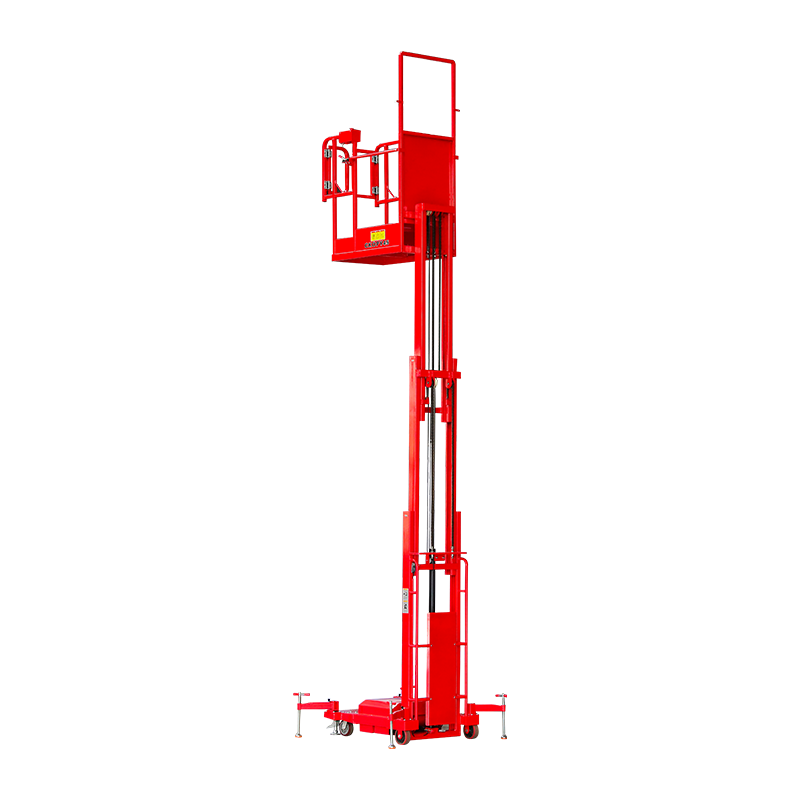 CKOPY27–CKOPY45 Half Electric High-Altitude ReclaimerBattery lifting-only reclaimer for aerial picking, manually moved and fixed in position; suits warehouse and supermarket shelf tasks with 200 kg load.View Product →
Battery type also affects total cost of ownership. Lead-acid packs are cheaper up front but need ventilation and watering, while lithium packs cost more and tolerate opportunity charging between breaks. The right answer depends on whether the machine has a fixed parking bay with mains power or roams across the site.
Aisle width is measured between the outermost obstructions, including rack uprights, conveyors and pallet overhang, not between painted lines. As a working rule, a self-propelled unit needs its overall width plus roughly 150 to 250 millimetres of clearance on each side to travel and turn safely. Units with hydraulic steering turn tighter than units on fixed or universal castors, which matters when the route includes a 90-degree corner into a cross aisle.
Floor point load is the specification most often left to the end. Wheel loads are not simply machine weight divided by four; they rise during braking, cornering and with the load raised. Older mezzanine decks and suspended slabs may not accept the concentrated load even where the total machine weight is acceptable. Ask for wheel load figures per axle and have a structural engineer confirm the slab capacity along the planned route.
Floor finish matters too. Epoxy coatings and joint filler can be marked or lifted by hard wheels under a heavy load, and a machine that moves between a smooth warehouse floor and an outdoor apron needs its wheel compound and permissible floor gradient checked before the trial.
Certification claims are easy to make and easy to check. An indoor lifting platform should arrive with documentation covering the relevant standard for its class, the CE marking where applicable, a load test record and a maintenance schedule. At minimum, confirm the following in writing before the deposit is paid:
Operator training is a separate obligation and should not be assumed to be included. A supplier that provides a commissioning walkthrough, a written load chart and a spare-parts list is easier to work with over a ten-year machine life. Our own experience as an aerial work platform manufacturer is that most disputes arise not from the platform itself but from a missing clearance drawing or an unverified slab.
A standard machine stops making sense when the load is not pallet-shaped, when the travel path passes through a fire door or a listed structure, or when the platform has to interface with a fixed conveyor or mezzanine edge. In those cases the design work moves to the front of the project: dimensional survey, load case definition, control philosophy and a frozen interface drawing.
The trade-off is lead time. A standard self-propelled reclaimer can often be delivered from stock, while a bespoke platform needs a design freeze before steel is cut. Budget three to four months for a straightforward custom unit and longer where additional certification is required. Where the requirement is a one-off lift at a single station, a custom platform usually costs less over its life than adapting a standard machine with bolt-on modifications that never quite fit.
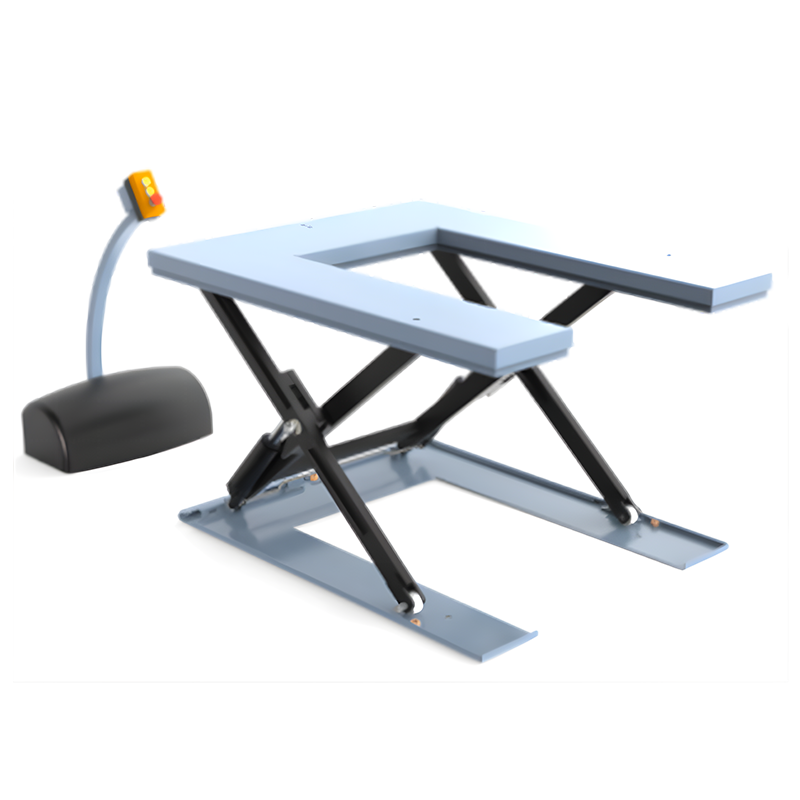 0–100,000 kg Professional Custom Heavy-Duty Lifting PlatformCustom-engineered platform with 0–100,000 kg capacity, high-precision positioning, multi-point synchronous lifting and customizable interface for ultra-heavy or large-dimension lifting requirements.View Product →
Bring four figures to the conversation with any supplier: the highest working point, the heaviest load per trip, the narrowest aisle on the route, and the slab capacity under the wheels. Add the power source and shift pattern, and the shortlist usually narrows to two models. Everything else, from deck size to wheel compound, is a refinement of those inputs rather than a substitute for them.
If the numbers do not fit any standard model, that is a signal rather than a setback. A machine that matches the racking, the aisle and the floor is cheaper to run over a decade than one chosen mainly on price or on the platform height printed in the brochure.
This self-propelled single mast aluminum alloy lift platform is built with high-strength aluminum alloy, offering a ligh...
The hydraulic self-propelled scissor lift aerial work platform can be easily driven and moved on flat and solid ground a...
Semi-electric scissor lifts platform are lighter and smaller in size, making it easier for workers to lift or lower the ...
We have a professional team with decades of industry experience. Relying on the continuous in-depth development of the s...