A maintenance team needs to reach a ceiling fixture above a 1.2 m aisle, with racking on one side and a door frame at the turn. A standard scissor lift may have the platform height but not the footprint. Miniaturized scissor lifts are built for that constraint: they shorten the chassis, narrow the deck, and reduce weight so the machine can enter, turn, and set up without closing the aisle. The qualification matters. “Mini” is a description, not a guarantee. The right machine fits the stowed width, turning path, wheel loads, capacity, and power system to the actual job.
What Miniaturized Means in Practice
Miniaturized scissor lifts sit at the small end of the family, but no single standard defines the class. Two models with similar platform heights can differ by hundreds of millimeters in width and by a large margin in weight. Ask for these figures before comparing brochure photos:
- Stowed length, width, height, platform width, and deck extension length.
- Wheelbase, turning radius, and swept path at full steering lock.
- Loaded wheel load, contact area, and floor pressure.
- Rated capacity at maximum height and with the deck extended.
- Battery capacity, charger type, and realistic duty cycle per shift.
The scissor lift aerial work platform range separates semi-electric, hydraulic-steering, universal-wheel, and narrow-body models. Use those categories after the route is measured, not as a substitute for measuring it. A compact lift with a large deck extension can have a larger working footprint than its stowed dimensions suggest.
Measure the Aisle and the Turn, Not Just the Door
A lift fits an aisle only if it can travel, turn, and set up without touching racking, cables, or door frames. A 1.2 m aisle and a 1.15 m machine leave 50 mm total clearance, or 25 mm per side. That is not a comfortable margin once floor joints, pallet corners, and operator error are included. For repeated steering, plan for more clearance and check tail swing, not only body width.
Walk the route with a tape and note the narrowest point, the tightest 90-degree turn, door thresholds, ramp grade, and floor surface. If the machine must turn into a 2.4 m bay, the swept path may decide the purchase before platform height does.
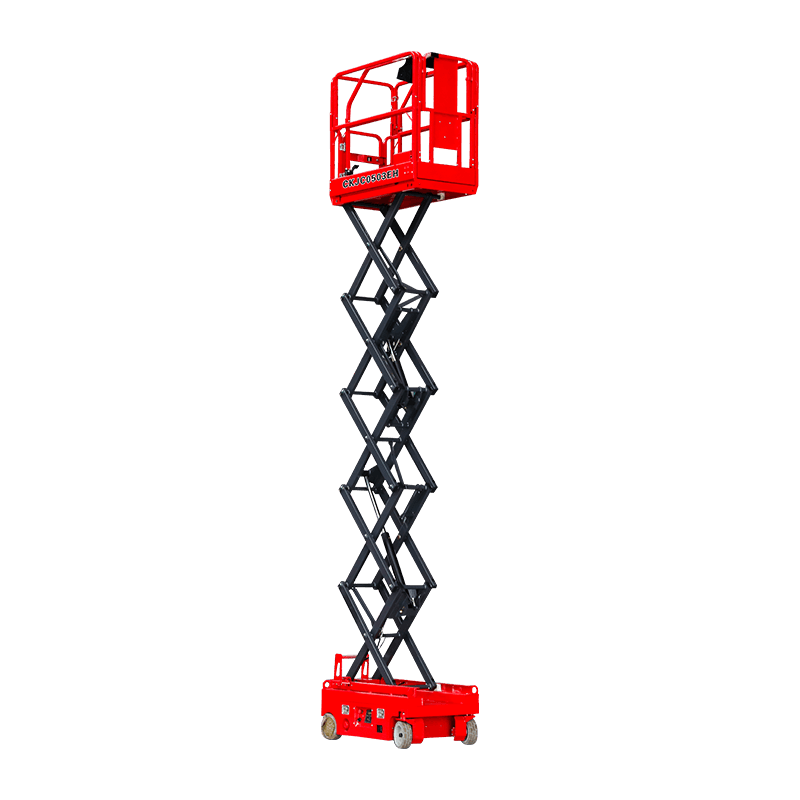 Mini Electric Hydraulic Steering Scissor Lift SeriesFor tight turns and narrow bays, this compact electric scissor lift series offers hydraulic steering and indoor/outdoor use; check charger placement against the route.View Product →
The mini electric hydraulic steering mobile scissor lift family is the relevant reference for repeated small corrections around racking legs and pallet corners. Confirm that the charger location does not force the machine to reverse through the tightest turn.
Floor Loading and Deflection Are Not Side Issues
Low machine weight helps, but total weight is not a floor assessment. A 300 kg lift can produce high point loads through four wheels, especially when the deck is loaded and extended. Ask for loaded wheel load, contact area, and floor pressure, then compare them with the slab rating. On suspended slabs, raised floors, basements, and dock edges, a structural engineer may need to review the load spread.
Deflection is the second check. A deck extension with a person or tools at the tip changes the stability envelope. Request steel-gauge and deflection data for the deck and chassis, plus a load test report for the exact configuration. Do not accept “it is light” as a substitute for wheel-load figures.
Power and Wheel Layout Decide the Real Work Cycle
Semi-electric versus full electric
A semi-electric scissor lift usually combines powered lifting with manual travel. It can suit a fixed workstation where the machine moves a few meters between tasks on a smooth, level floor. The lower cost is real, but so is the operator effort. Check push force on a ramp, brake performance, and battery capacity for the lift function.
Full electric drive is easier to justify when the route is long or the machine moves between departments several times per shift. Base the decision on distance, floor grade, shift length, and charging access.
Hydraulic steering versus universal wheels
Hydraulic steering gives controlled turning and precise positioning. Universal wheels can help with mixed-direction movement in storage areas, but they need smooth floors, locked casters, and a check for swarf, grit, and cable covers.
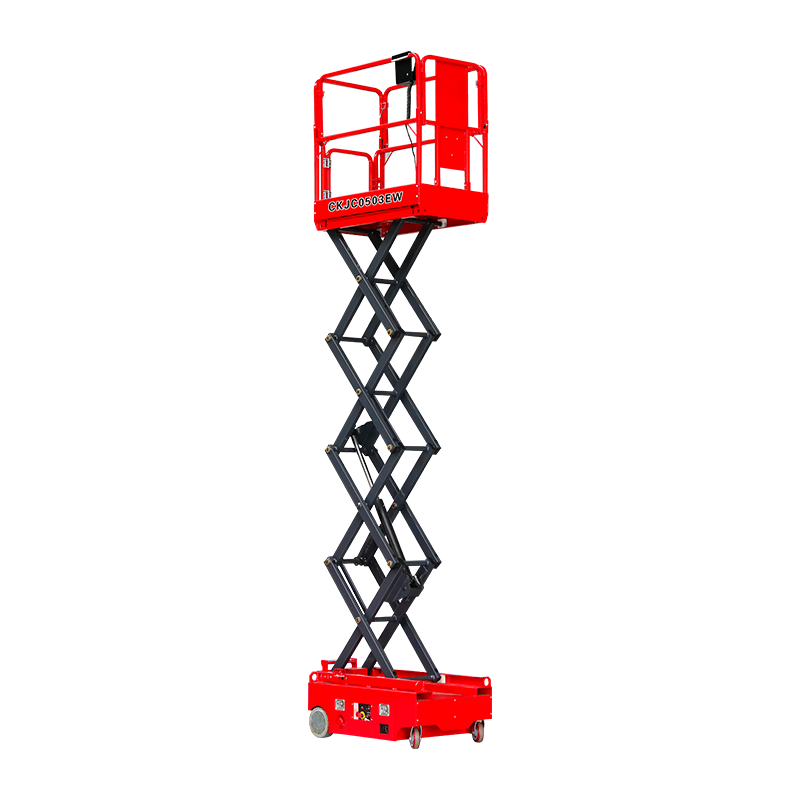 Mini Electric Mobile Scissor Lift with Universal WheelsFor clean floors and tight storage corners, this narrow electric lift offers 360° turning, universal casters and 300 kg capacity; check caster locks.View Product →
The mini electric mobile scissor lift with universal wheels is a practical reference where the route has tight corners and the floor is clean. Check wheel material, caster locks, and braking method before putting it into a busy picking aisle.
Compare Configurations on the Work Envelope
A useful shortlist compares configurations against the route, the floor, and the task. Platform height is only one column. The table is a screening tool, not a specification sheet; confirm actual ratings for the model you intend to buy.
Table 1. Miniaturized scissor lift configurations are selected by aisle, drive, and floor conditions rather than platform height alone.
| Configuration |
Best-fit job |
Main procurement check |
Common risk |
| Semi-electric scissor |
Fixed indoor workstation with short moves |
Push force, brake, battery for lift function |
Operator fatigue on longer routes |
| Mini electric hydraulic steering |
Repeated tight turns around racking and doors |
Swept path, steering control, charger access |
Clearance lost to tail swing |
| Mini electric with universal wheels |
Smooth-floor storage areas with mixed-direction movement |
Caster locks, wheel material, floor debris |
Poor tracking on slopes or rough concrete |
| Narrow-body scissor |
Aisle-constrained maintenance and racking work |
Platform width, capacity, side stability |
Using width as a substitute for reach planning |
Use the table to eliminate poor fits early. Then ask for a dimensional drawing, a load chart, and a demonstration on a route that matches the real aisle. A machine that looks compact on paper can still fail at the first turn.
Narrow-Body Lifts: Fit Is Necessary, Not Sufficient
Narrow-body scissor lifts are useful where the aisle is fixed by racking, door frames, or maintenance corridors. They reduce body width, but that reduction has to be paid for somewhere: stability margin, deck space, capacity, or base size. Include a side-stability check, a capacity check at full height, and a clear rule about deck extensions.
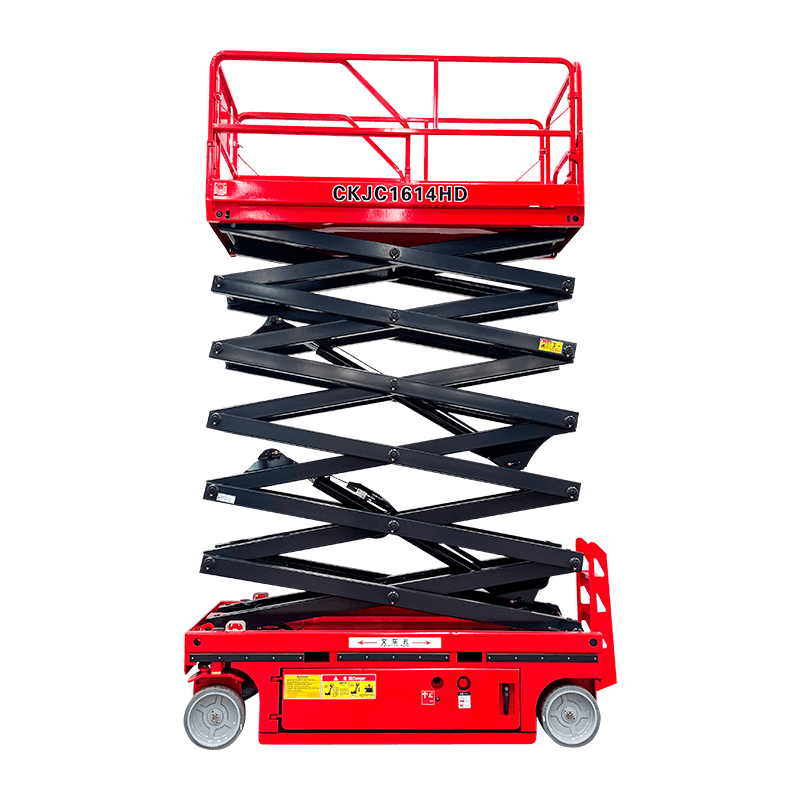 Hydraulic Self-Propelled Scissor Lift RangeFor racking- and corridor-limited aisles, this hydraulic scissor lift range offers narrow-body models up to 16 m and 500 kg; verify platform width and side stability.View Product →
The narrow-body scissor lift range is a starting point for aisle-constrained maintenance. Confirm platform width with tools and materials in place, not just body width. If the task needs outreach beyond the platform edge, a scissor lift is the wrong tool. Near open doors or loading bays, check wind exposure and side-load limits before raising the platform.
Safety and Procurement Checks Before You Sign
Before purchase, require the following information in writing. It protects the operator and reduces the chance of a machine that fits the aisle but fails the floor, the task, or the service plan.
- Confirm platform height and working height definitions. Working height commonly adds about 2 m to platform height, but confirm the manufacturer’s definition.
- Check rated capacity at maximum height and with the deck extension deployed, then account for tools, materials, and the number of people allowed on the platform.
- Verify guardrail height, toe board, entry gate, and control interlocks against the site requirements.
- Require tilt sensing, overload protection, emergency lowering, brake tests, and a charger that matches the available power supply.
- Obtain loaded wheel loads, floor pressure, and route clearance data; check them against the slab and the narrowest turn.
- Ask for CE or ISO documentation, test reports, and a declaration of conformity where applicable. Check the document scope, not only the logo.
- Confirm spare parts, service response, operator training, and battery replacement availability for the expected service life.
For a more detailed walkthrough, see the electric scissor lift platform selection and safety guide. A short trial in the actual aisle is often more useful than a long specification debate.
The practical buying sequence is route first, floor second, task third, and configuration fourth. Measure the narrowest clear width, the tightest turn, the ramp, and the floor beneath the wheels. Compare platform height, deck size, wheel load, power system, and service support. Then ask for a demonstration with the deck extension and the expected tools in place. Miniaturized scissor lifts work well when the machine fits the building and the work cycle; they create problems when “mini” is treated as a synonym for “suitable.”

 English
 Español
 عربى